
In short
- Residential pool of 47M+ rotating IPs across 220+ locations, as declared by the provider
- Six proxy types plus an enterprise track under one account, with no monthly lock-ins stated
- ISO/IEC 27001:2022 and ISO 9001:2015 certification, plus GDPR, CCPA and ePrivacy compliance stated
- Mobile coverage reaches only 20+ countries against 220+ residential locations, so the mobile footprint is much thinner
- Uptime, success-rate and response-time figures are the provider's own, with no independent test cited
How we scored it
- Network coverage 4.5
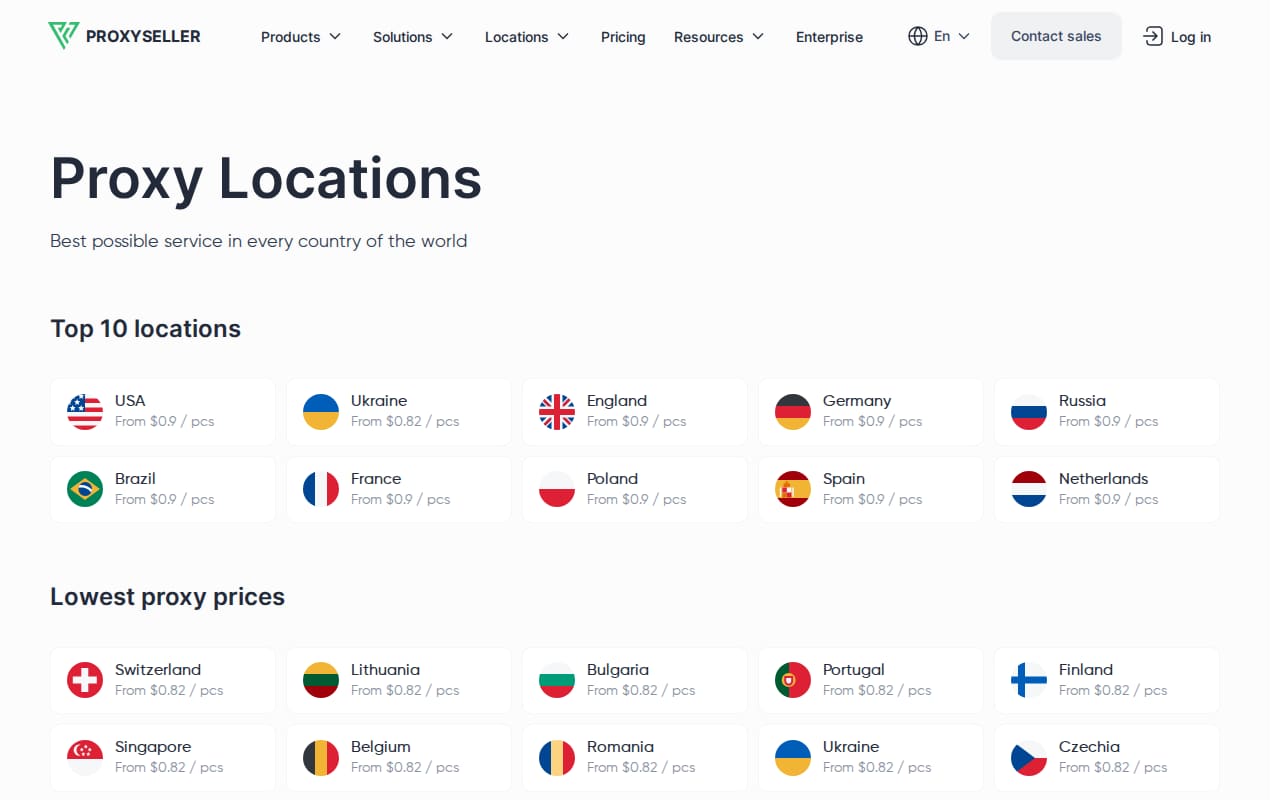
- The provider declares 47M+ residential IPs across 220+ locations, 600+ IPv4 networks and 20+ mobile countries, which is broad on the residential side and much narrower on mobile.
- Product range 4.7
- Six proxy types plus an enterprise track, covering both rotating residential and static ISP or IPv4 from one account.
- Pricing 4.5
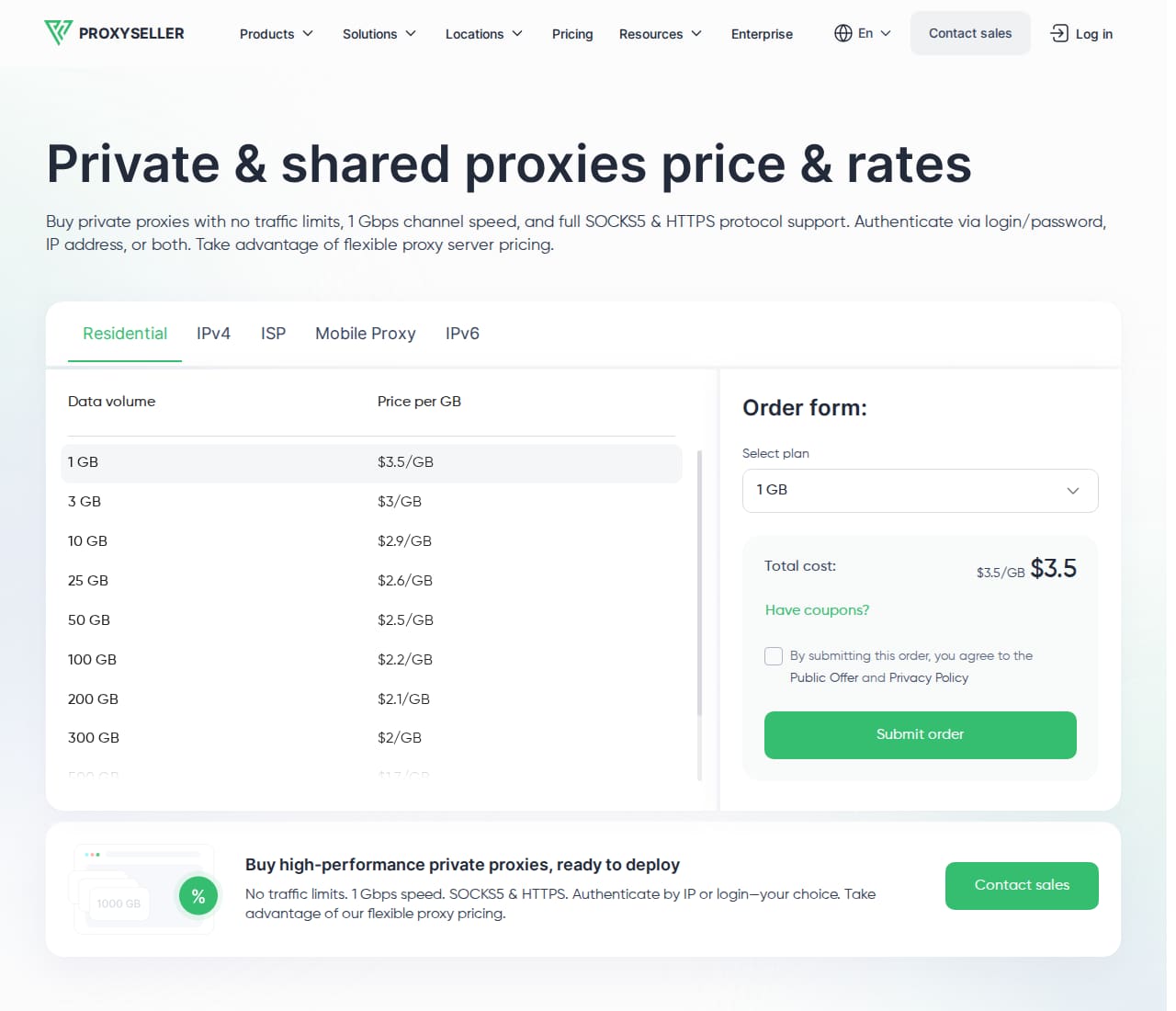
- Entry prices are published per unit — $0.30/GB residential, $0.49/IP IPv4, $0.02/IP IPv6 — and the provider states no monthly lock-ins.
- Compliance and certifications 4.6
- ISO/IEC 27001:2022 and ISO 9001:2015 certification plus stated GDPR, CCPA and ePrivacy compliance, DPA/SCC readiness and an EWDCI trust seal.
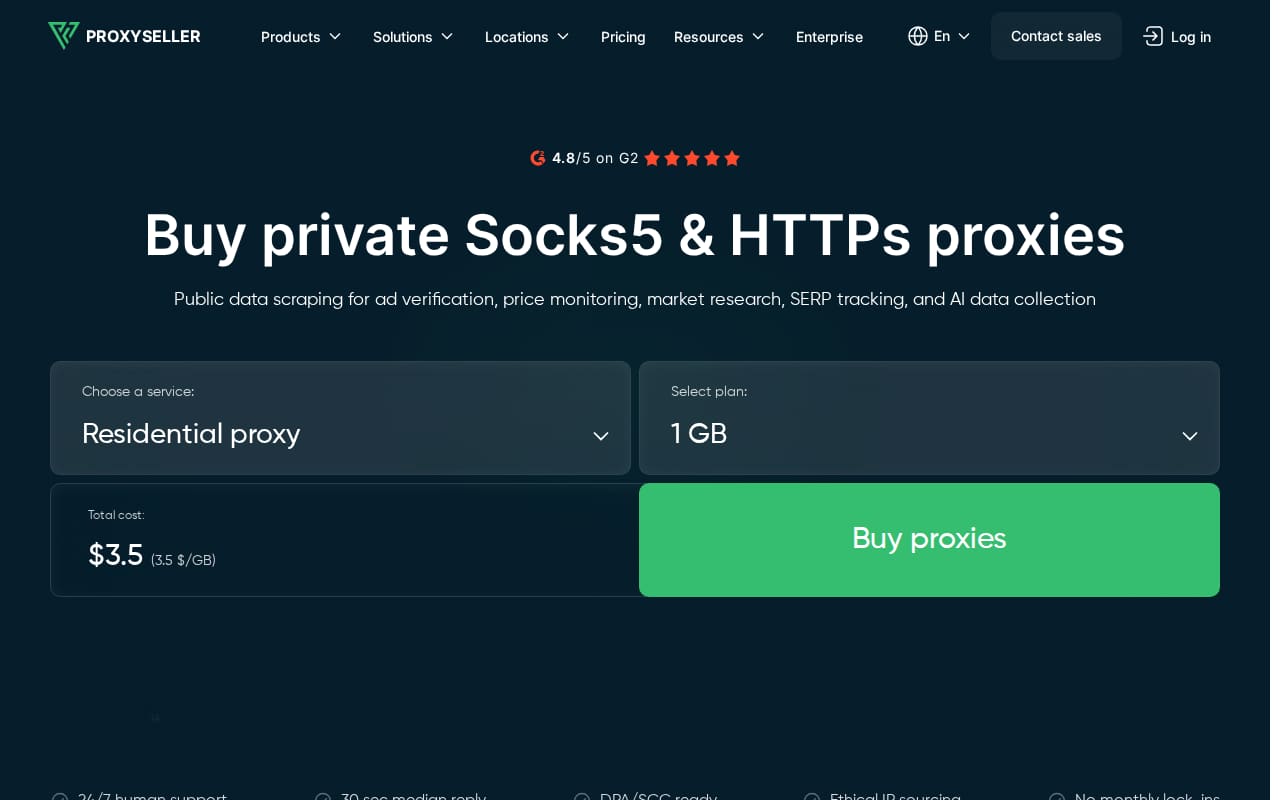
I picked Proxy-Seller up for the same reason I look at most mid-market proxy shops: I wanted one account that could cover residential, ISP and mobile without signing a separate term contract for each. The provider publishes its pool sizes, certifications and entry prices on the site rather than behind a sales call, which is enough to build a shortlist from. What follows comes from those published specifications and from the customer feedback the provider quotes on its own pages. I have not pushed my own traffic through the pool, so every figure below is the provider's claim, not my measurement.
What it is best for
Proxy-Seller suits teams that need several proxy types under one account and do not want to commit to a monthly term. The provider lists residential, mobile, IPv4, IPv6, ISP and datacentre lines plus an enterprise track, and states 'no monthly lock-ins' as its contract position. If your work is mostly rotating residential traffic with a slice of static addresses for logins, the range covers both without a second vendor.
- Rotating residential traffic at volume, across the 220+ locations the provider lists.
- Static ISP or IPv4 addresses for accounts that must keep the same exit IP.
- Mobile carrier traffic over Vodafone, T-Mobile or Orange on 5G/4G/LTE.
- IPv6-heavy work, where the provider declares 1,200,000+ unique addresses.
Which Proxy-Seller plan suits a scraping job that uses a few gigabytes a month?
Answers: 4
🏠 Residential, billed at $0.3/GB. Usage is metered by gigabyte, so a few GB a month lands in the cheapest entry point of the line-up, with 47M+ IPs and 220+ locations behind it.
🖥️ IPv4 at $0.49/IP. This is priced per address rather than per gigabyte, so it suits targets that expect a stable IP to keep coming back rather than a rotating one.
📱 Mobile at $10/IP. The highest per-unit entry point in the catalogue, aimed at carrier-grade 5G/4G/LTE traffic on Vodafone, T-Mobile and Orange networks across 20+ countries.
🌐 IPv6 at $0.02/IP. The cheapest per address by a wide margin, but only usable where the destination actually serves IPv6 traffic.
What I liked
The published specifications are unusually specific for this segment. Pool sizes, location counts, protocols, carrier names and certifications sit on the site instead of behind an account manager, which lets you shortlist without a call. The compliance line-up is the part I would lean on: ISO/IEC 27001:2022 and ISO 9001:2015 certification, GDPR, CCPA and ePrivacy Directive compliance, DPA/SCC readiness and an EWDCI trust seal are all stated by the provider. For a proxy vendor that is more paperwork than most bother to obtain.
The customer feedback the provider quotes fits the shape of the product too — comments about frequent discounts, a clear buying process with obvious choices, and a mix of static IPv4 and mobile purchases. I would treat quoted testimonials as marketing, but the specifics they mention do line up with the product list.
What I didn't
The mobile footprint is much narrower than the residential one. The provider declares 220+ residential locations but only 20+ mobile countries, so anything mobile-first runs out of geography sooner.
The performance figures are the provider's own: 99.7% uptime, a 99.5%+ connection success rate and roughly 0.35s response time on residential. The provider cites no independent test for them.
The products
Seven lines are listed, each priced per unit rather than per seat:
- Residential proxy — 47M+ real rotating user IPs across 220+ locations, from $0.30/GB as published.
- Mobile proxy — 20+ countries on Vodafone, T-Mobile and Orange, 5G/4G/LTE, from $10/IP.
- IPv4 proxies — a 1 Gbps channel across 600+ networks, from $0.49/IP.
- IPv6 proxies — 1,200,000+ unique IPs, from $0.02/IP.
- ISP proxies — static addresses with speeds quoted up to 1 Gbps, from $0.98/IP.
- Datacentre proxies — from $0.02/IP.
- Enterprise proxy solutions.
The provider says its IPs are ethically sourced from verified network providers worldwide. That is a statement about sourcing policy, not something an outside reader can check.
How to get started
The product pages suggest a simple order: pick the proxy type, choose a location and a volume, then buy. Authentication is by IP whitelisting or by credentials, through the RESTful API and SDK support the provider lists.
Practically, I would take a small residential or IPv4 order first, confirm the exit IPs geolocate where you need them, then scale. That is the same sequence I use with every provider, and the absence of a term contract makes it cheap to do here.
Integrations
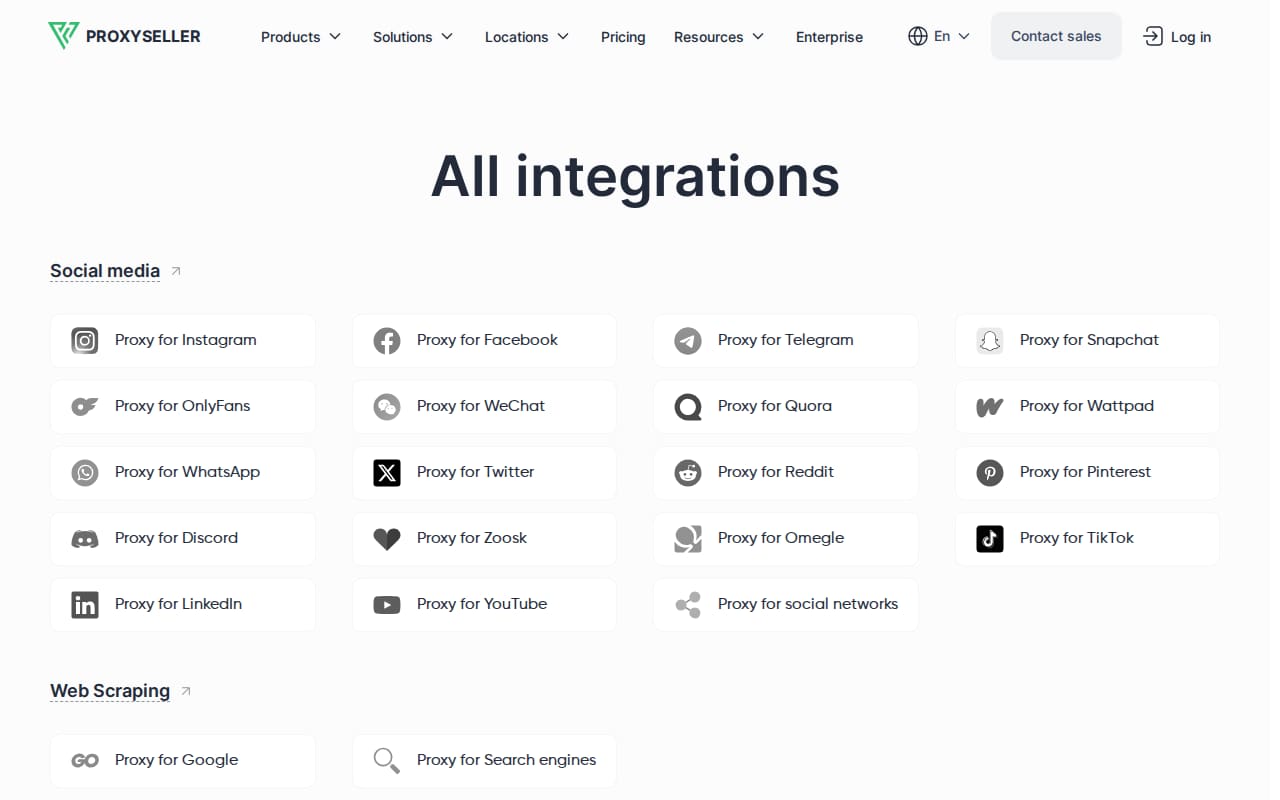
Authentication and automation are covered by a RESTful API, IP whitelisting and SDK support, all stated by the provider. HTTP, HTTPS and SOCKS5 are the supported protocols, so most scraping frameworks, headless browsers and automation tools will connect without a shim. The provider also publishes use-case pages for Telegram, LinkedIn, Google, eBay and Twitter proxies, which tells you where it sees demand rather than how the integration actually behaves.
Pricing
Entry prices are published per unit, which makes them easy to compare with other vendors. The figures in the pricing table are starting prices. The real cost depends on volume, location and rotation settings.
The spread is wide and reflects how the products differ: per-gigabyte billing for rotating residential, per-address billing for static lines. The provider states there are no monthly lock-ins, and the feedback it quotes mentions frequent discounts, so it is worth watching the site rather than buying at list on a first visit.
Customer service
Support is advertised as 24/7 human, with a median reply time quoted at 30 seconds. That is the provider's number, not mine, and a median is easy to flatter with a fast first chat response.
Characteristics
- Customer rating
- 4.8/5 on G2
- Users worldwide
- 185,000+
- Uptime
- 99.7%
- Connection success rate
- 99.5%+
- Support availability
- 24/7 human support
- Median support reply
- 30 sec
- Contract terms
- No monthly lock-ins
- IP sourcing
- Ethically-sourced proxies from verified network providers worldwide
- Compliance
- DPA/SCC ready
- Compliance
- GDPR, CCPA, and ePrivacy Directive compliant
- Certification
- ISO/IEC 27001:2022 certified
- Certification
- ISO 9001:2015 certified
- Trust seal
- EWDCI Trust Seal
- Protocols
- HTTP/HTTPS/SOCKS5
- Residential IP pool
- 47M+ real rotating user IPs
- Residential locations
- 220+ locations
- Mobile countries
- 20+ countries
- Mobile carrier networks
- Vodafone, T-Mobile, Orange
- Mobile network generations
- 5G/4G/LTE
- IPv4 channel
- 1 Gbps channel
- IPv4 networks
- 600+ networks
- ISP proxy speed
- Up to 1 Gbps
- IPv6 IP pool
- 1,200,000+ unique IPs
- Datacenter proxy pricing
- From $0.02/IP
- API
- RESTful API, IP whitelisting, and SDK support
figure published by the provider, not measured by us.
Price table
Scroll the table sideways to see every column.
| Billing | Plan | Traffic | Price | Per GB |
|---|---|---|---|---|
| — | Residential proxy | — | From $ 0.3/GB | $ 0.3 |
| — | ISP | — | From $ 0.98/IP | — |
| — | IPv4 | — | From $ 0.49/IP | — |
| — | Mobile proxy | — | From $ 10/IP | — |
| — | IPv6 | — | From $ 0.02/IP | — |
| — | Datacenter proxies | — | From $ 0.02/IP | — |
Prices as recorded on Oct 16, 2026 · Home page 'Customers choice' and product listing prices
Published figures
- Uptime
- 99.7%
- Connection success rate
- 99.5%+
- Residential proxy response time
- ~0.35s
- Median support reply time
- 30 sec
These figures are published by the provider or by third-party listings , recorded on Oct 16, 2026 . — not measurements of ours. We have not run independent tests against this provider; see our methodology.
What stood out
In its favour
- Residential pool of 47M+ rotating IPs across 220+ locations, as declared by the provider
- Six proxy types plus an enterprise track under one account, with no monthly lock-ins stated
- ISO/IEC 27001:2022 and ISO 9001:2015 certification, plus GDPR, CCPA and ePrivacy compliance stated
- DPA/SCC readiness and an EWDCI trust seal, which matters for procurement review
- Entry pricing published per unit: $0.30/GB residential, $0.49/IP IPv4, $0.02/IP IPv6
- HTTP, HTTPS and SOCKS5 support with RESTful API, IP whitelisting and SDK access
- 1 Gbps IPv4 channel across 600+ networks, per the provider's specification
- 24/7 human support advertised with a 30-second median reply time
Against it
- Mobile coverage reaches only 20+ countries against 220+ residential locations, so the mobile footprint is much thinner
- Uptime, success-rate and response-time figures are the provider's own, with no independent test cited
Our verdict
Proxy-Seller is a reasonable pick if you want residential, ISP and IPv4 capacity under one account without a monthly term. The certifications help if you have to justify the purchase internally. The mobile line is the weak spot: 20+ countries against 220+ residential locations is a real difference in reach. I would not buy on the performance figures alone, since they are the provider's own and no independent test backs them. If you need mobile-first coverage, check the country list before paying.
Try Proxy-SellerWould you recommend Proxy-Seller?
Readers who have used it — one tap, no sign-up.
Thanks — your answer is counted below.
% of would recommend it · / 5
Questions about Proxy-Seller
Which proxy types does Proxy-Seller offer?
The provider lists residential, mobile, IPv4, IPv6, ISP and datacentre proxies, plus enterprise proxy solutions.
Does Proxy-Seller require a monthly contract?
The provider states there are no monthly lock-ins.
What protocols are supported?
HTTP, HTTPS and SOCKS5, as stated by the provider.
How large is the residential pool?
The provider declares 47M+ real rotating user IPs across 220+ locations.
What certifications does the provider hold?
ISO/IEC 27001:2022 and ISO 9001:2015, plus stated GDPR, CCPA and ePrivacy Directive compliance, DPA/SCC readiness and an EWDCI trust seal.
Ask a question about Proxy-Seller
No sign-up. We answer the ones that come up most.
Other reviews
Links to Proxy-Seller on this page are affiliate links: if you buy through them we may earn a commission, at no cost to you. It does not change what we write — see our monetisation policy. Looking for free proxies instead? Our free list and proxy checker are free to use.